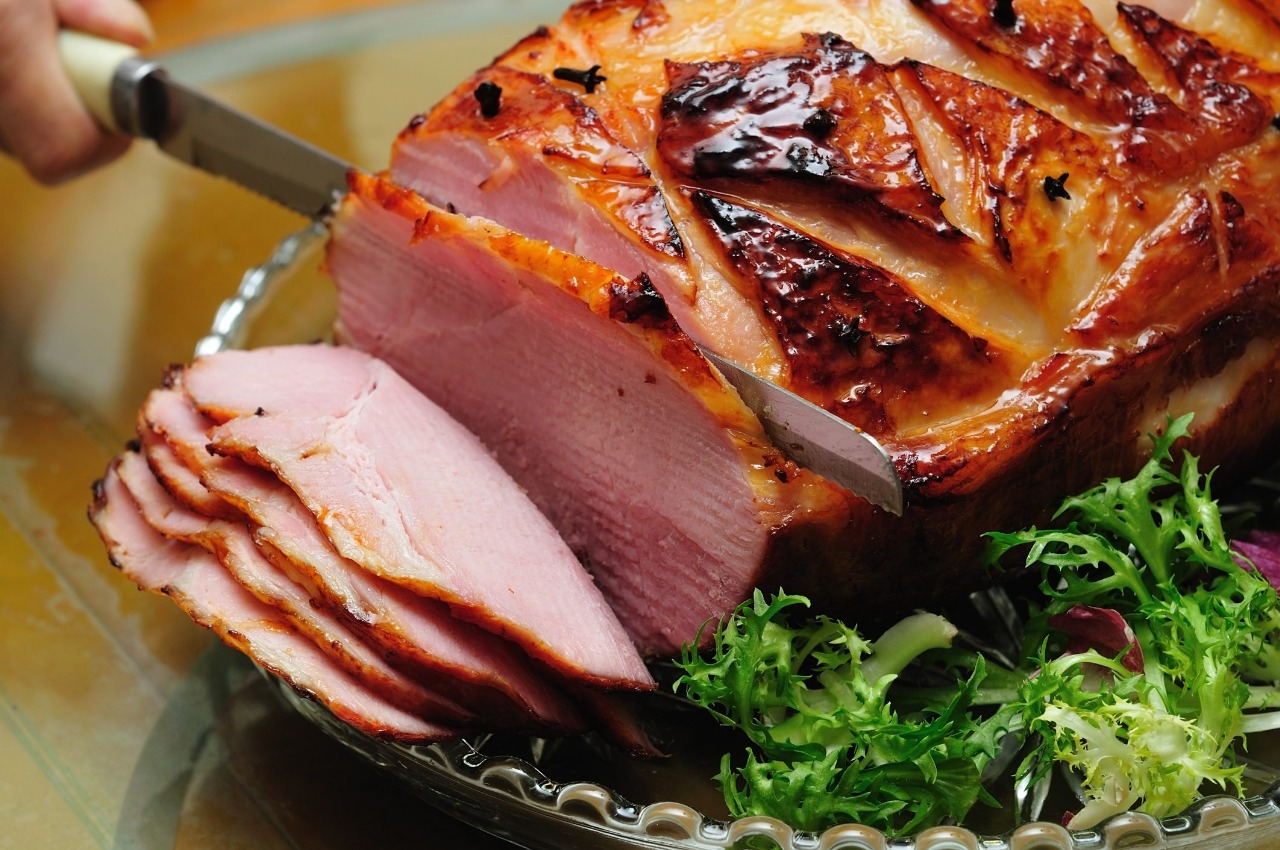
The same can happen in deli meat, as a thin layer of fat or oil from the animal tissue can sit on the surface of our cold cuts and reflect light differently. Deli meat sliced from whole cuts of an animal is prepared by cutting against the grain of the tissue, leading to exposed, severed fibers that diffract the light and cause us to see rainbows. (This, by the way, is why you don’t see shiny bologna—those fibers have long since been emulsified by the time you eat a slice.)
Slate explains that these severed fibers only create a metallic sheen when the grooves between them are properly aligned to diffract light. This iridescence is more likely to occur in cooked or cured meat, like cold cuts, because the fibers are rendered firm in the cooking process. While other meats might undergo the same phenomenon, we tend to associate it most with ham and roast beef where the shiny reflections are most pronounced.
Does the rainbow color on deli meat mean it’s bad?
The presence of a metallic sheen on your ham or roast beef is nothing to worry about in and of itself; diffraction doesn’t make food any less safe. The USDA notes that “spoiled cooked beef would probably also be slimy or sticky and have an off-odor.” For best results, fresh sliced deli meat should be kept refrigerated at all times and used within three to five days.
